Health News Editors – Your Source for Breaking Health News
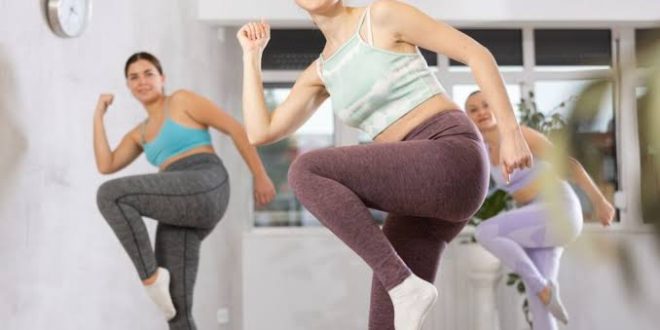
Zumba combines repeated steps, turns and directional changes at a pace determined by music. Participants attending zumba classes singapore should pay attention to how the feet interact with the floor during these transitions, especially when fatigue, footwear or limited space makes turning less controlled.
Knee comfort is influenced by more than the number of squats or lunges in a class. A large amount of rotational stress can develop when the upper body changes direction while the foot remains fixed.
A Pivot Should Involve the Whole Body
During a controlled pivot, the foot, knee, hip and torso change direction together. The foot turns enough to allow the knee to continue following the general direction of the toes.
Problems can arise when the shoe grips the floor while the pelvis and torso rotate. The knee is then placed between a fixed foot and a moving upper body.
This does not mean every pivot is harmful. It means the participant needs enough foot movement, space and control to complete the turn as one coordinated action.
Pivot Frequency Changes the Total Demand
One turn may feel easy, but a class can include hundreds of direction changes across several tracks. The total rotational exposure becomes more important than any single movement.
Participants may maintain control early in the class and begin taking smaller, less organised steps later. This makes pivot quality a fatigue issue as well as a technical issue.
The instructor can reduce repeated turning in later tracks or provide an option that keeps the participant facing forward.
Footwear and Flooring Interact
Shoes with strong grip can feel stable during straightforward steps but resist rotation during pivots. Highly cushioned footwear may create a different problem by allowing the foot to move on a soft, elevated sole.
The studio floor also affects traction. A shoe that turns comfortably on one surface may feel fixed on another.
Participants should assess how footwear behaves during actual dance movements, not only while walking or performing stationary exercises.
Step Size Affects Knee Control
Large lateral steps and wide turns require greater control from the hips and legs. As the stance widens, participants may struggle to move the foot quickly enough for the next direction change.
Reducing step length can improve control without removing the rhythm of the movement. The participant can still follow the sequence while keeping the feet closer to the body.
Smaller steps are particularly useful in crowded studios or during fast tracks.
Fatigue Makes the Foot Arrive Late
As the class progresses, the torso may begin turning before the foot has completed its repositioning. This timing difference can increase rotational demand at the knee.
Participants should notice whether pivots become sticky, rushed or unbalanced. A forward-facing modification may be more appropriate when this occurs.
The aim is to preserve continuous movement without forcing the original turn after coordination has declined.
Hip Control Supports Direction Changes
The hips help organise the knee during stepping and turning. If the participant loses hip control, the knee may move inward or the body may collapse towards one side.
Strength work outside the class can support this demand. Split squats, controlled step-downs and lateral movements may help participants manage force in different directions.
These exercises do not guarantee the absence of discomfort, but they can develop useful capacity for the movement patterns found in class.
The Knee Should Not Be Viewed in Isolation
An uncomfortable knee movement may begin with the foot, hip or overall timing. Correcting only the visible knee position can miss the cause.
The participant may need to adjust shoe choice, reduce the pivot angle or complete the step with more time. The instructor’s movement option should make these changes easy to follow.
Persistent or worsening pain should not be treated as a normal part of dance fitness.
Use Grounded Alternatives
A pivot can often be replaced with a step-turn sequence in which the feet are lifted and repositioned rather than twisted against the floor. The participant may also maintain the same rhythm while facing forward.
These options reduce rotational demand while preserving cardiovascular movement. Arm patterns can remain active to maintain whole-body involvement.
The modification should be introduced before discomfort becomes severe.
Position in the Room Matters
Participants need enough space to complete turns without avoiding nearby people. When space is limited, they may shorten one side, rotate late or place the foot at an awkward angle.
Standing where the instructor remains visible can also reduce rushed corrections. Participants who lose sight of the demonstration may react after everyone else has already changed direction.
A slightly smaller movement performed on time is often better than a large movement performed late.
Warm-Up Response Provides Information
Early tracks allow participants to assess the floor, footwear and current knee comfort. Direction changes should become smoother as the body warms.
If discomfort increases during simple steps, larger pivots are unlikely to improve the situation. The participant can use reduced-turn options from the beginning.
At True Fitness Singapore, class participants can follow instructor modifications and choose movement ranges that suit their current control and available studio space.
Comfort Depends on Repeated Quality
Knee comfort during Zumba is not determined by whether one turn looks correct. It depends on how consistently the participant manages many turns as speed and fatigue increase.
Coordinated pivots, suitable footwear, smaller steps and early modifications can reduce unnecessary rotational stress. The goal is to preserve rhythm and enjoyment without allowing the fixed foot and moving body to compete at the knee.